The Neuroscience Revolution in English Language Teaching: How Modern Brain Research is Transforming the Way We Learn
Introduction In recent years, the field of English language teaching (ELT) has entered a new era—one shaped by the findings of modern neuroscience. For decades, teaching practices relied heavily on traditional classroom methods and fixed theories about how people learn languages. Today, however, cutting-edge brain research is challenging these assumptions and providing teachers with a deeper understanding of how the mind truly acquires a new language.
This article explores the latest scientific discoveries about language learning, their implications for English teaching, and how educators can apply these insights to achieve better results for their students.
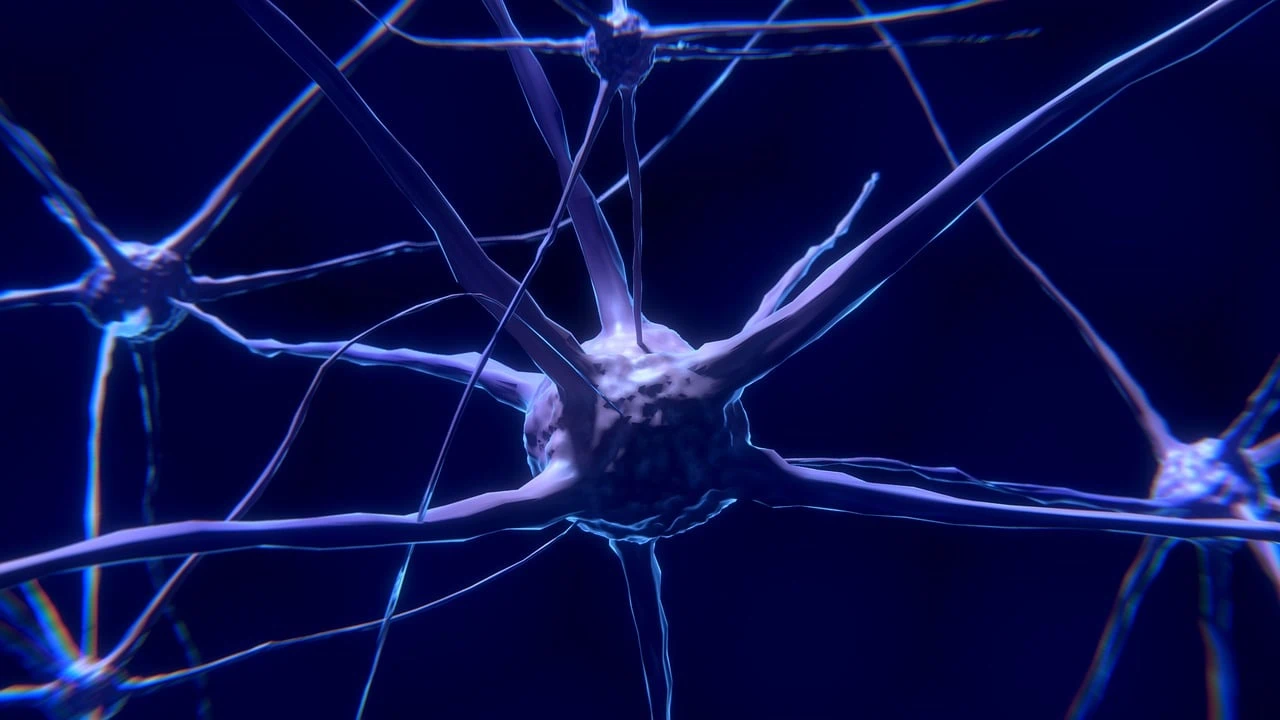
Language Learning in the Brain: More Than Just One Area Contrary to the old belief that language is stored in a single “language center,” modern neuroimaging shows that acquiring a second language involves multiple interconnected brain networks.
Four major systems are now understood to play a key role:
Perisylvian Network – handles grammar and vocabulary processing.
Frontoparietal Networks – control focus, problem-solving, and mental flexibility.
Salience Networks – detect important information and maintain attention.
Default-Mode Networks – support reflection and internal processing.
These systems work together like a well-coordinated orchestra, and their activity patterns can even predict an individual’s future success in language learning. This means we are moving toward personalized teaching methods based on each learner’s unique brain activity.
Adult Brains and the Myth of the ‘Critical Period’ For years, the Critical Period Hypothesis suggested that adults could never reach native-like proficiency in a new language. Neuroscience now proves this belief overly simplistic.
While young learners may absorb language more naturally, adults possess stronger metacognitive skills—such as planning, analyzing, and self-correcting—that can compensate for any age-related differences. Research has documented adults mastering their seventh language to near-native fluency, showing that neuroplasticity—the brain’s ability to change—remains active well into later life.
Key takeaway for learners: It is never “too late” to learn English to an advanced level.
Implicit Learning: Why We Need More Than Grammar Rules Traditional teaching often emphasizes explicit learning—studying grammar rules and memorizing vocabulary lists. Yet the brain learns much of language implicitly, by unconsciously detecting patterns in speech and text.
This “statistical learning” allows us to recognize word sequences and structures without conscious effort. Therefore, the best English lessons combine meaning-rich input—stories, conversations, and authentic materials—with explicit explanations, giving learners both the unconscious patterns and the conscious knowledge they need.
Working Memory: The Brain’s Language Engine Working memory acts like the brain’s notepad, holding and processing new words and structures while we use them. Strong working memory is linked to better vocabulary retention, reading comprehension, and speaking fluency.
Importantly, it can be improved through targeted exercises such as:
Listening and repeating sequences of numbers or words.
Reading and summarizing short texts from memory.
Engaging in timed speaking tasks that require quick recall.
For English learners, phonological awareness (the ability to recognize and manipulate sounds) is especially important for pronunciation and listening skills.
Embodied Cognition: Learning with the Body Neuroscience shows that understanding language often activates motor and sensory areas of the brain. For example, hearing the word “run” activates regions related to physical movement.
This explains why gestures, physical actions, and multisensory experiences—such as acting out dialogues or using props—help students remember words and concepts more effectively. In other words, the more senses involved in learning, the deeper the memory.
The Spacing Effect: Why Timing Matters One of the most proven brain-based techniques is the spacing effect—spreading out study sessions over time rather than cramming. Spaced repetition systems (SRS), used in apps like Anki and Duolingo, help strengthen long-term memory by reviewing information at the moment it is most likely to be forgotten.
Teachers can apply this by revisiting vocabulary and grammar points at increasing intervals, ensuring that students retain knowledge for the long term.
Where Traditional Methods Fall Short While traditional approaches like the Grammar-Translation Method may help with theoretical knowledge, research shows they do not fully activate the brain’s natural language-learning systems. Problems include:
Overemphasis on explicit rules rather than natural communication.
Rote memorization without context, leading to poor long-term retention.
Static learning environments with little sensory or social engagement.
Evidence-Based Strategies for Modern ELT Based on neuroscience research, the most effective English teaching methods include:
Input-Rich Instruction – Providing plenty of meaningful, comprehensible English in various formats.
Multimodal Learning – Combining visual, auditory, and physical activities.
Collaborative Tasks – Using group work to stimulate social and communicative brain networks.
Emotional Engagement – Creating positive learning experiences to enhance memory and motivation.
Spaced Repetition – Reviewing material at scientifically optimal intervals.
The Future: Personalized, Brain-Based Learning Emerging technologies such as real-time neural feedback, AI-powered spaced repetition, and virtual reality immersion are set to transform English learning even further. Soon, lessons could adapt instantly to a student’s brain activity, offering a truly personalized learning journey.
Conclusion Neuroscience has given English teachers a clear message: we must move beyond outdated, one-size-fits-all methods and embrace strategies that align with how the brain actually learns. By integrating implicit learning, multisensory activities, spaced repetition, and emotionally engaging tasks, educators can help students achieve faster, deeper, and more lasting language mastery.
The future of English teaching is not just about teaching the language—it’s about teaching to the brain.